
Lately, there’s been uproar over a government official allegedly attempting to erase the Enola Gay from databases. In an effort, to erase any perceived instances DEI (Diversity, Equity, and Inclusion) history is being erased. It’s mind-boggling, but some people never let logic or reason interfere with their agendas.
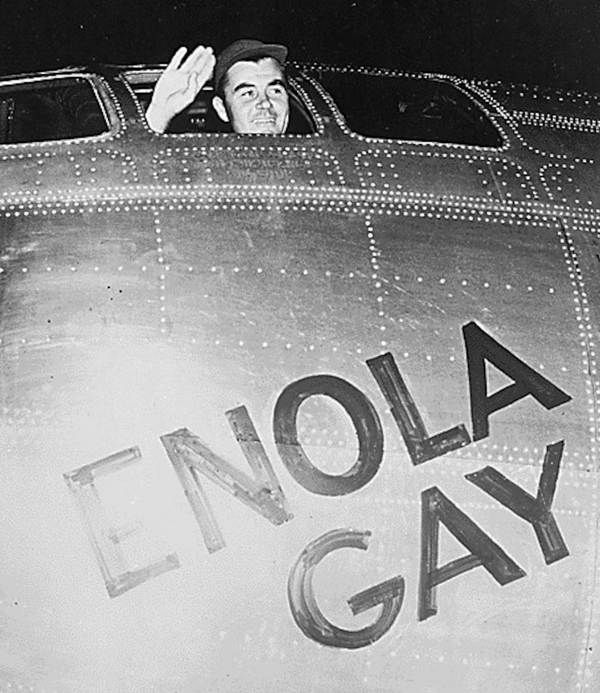
So, what’s the deal with the Enola Gay?

For those who may not know, the Enola Gay was the Boeing B-29 bomber that dropped the atomic bomb on Hiroshima, Japan, on August 6, 1945. The aircraft was named after Enola Gay Tibbets, the mother of pilot Paul Warfield Tibbets Jr. It was common practice for pilots to name their planes—often after their mothers, wives, or girlfriends. There was no hidden agenda, no conspiracy, no “woke” rewriting of history—just a pilot honoring his mother.
A Marvel of Its Time

The Enola Gay was one of the most sophisticated propeller-driven planes of its era. Its story began with the Glenn L. Martin Company and the U.S. government, which, in February 1941, began planning an aircraft assembly plant at Fort Crook, Nebraska. By November 1943, the Martin Bomber Plant had over 14,500 employees.
Initially, the plant produced the B-26 Martin Marauder, rolling out 1,585 aircraft in just two years. By the summer of 1943, production shifted to the Boeing B-29 Superfortress, a new four-engine bomber. More than 500 B-29s were built at the plant, including both the Enola Gay and Bockscar, the latter of which dropped the atomic bomb on Nagasaki.
Preserving History

The Enola Gay remains a significant piece of history, representing both the destructive power of war and the technological advancements of its time. Attempts to erase or rewrite its history, whether for political reasons or otherwise, undermine an honest understanding of the past.
For those interested in learning more, the Department of Defense archives provide a wealth of information on the Enola Gay and its legacy: Read more here.

 The Dee Zone